
Showers are built from tile, natural stone, acrylic, fiberglass, solid surface, and panel materials, and the right choice depends on wall location, floor location, and budget. If you are asking what material showers are made of, the short answer is that most modern showers pair a water resistant wall material with a slip resistant floor material. This guide covers every option, plus costs and materials to skip — and if you’re planning an actual bathroom remodel, it’ll help you walk into material selection already knowing the trade-offs.
Most showers use tile, natural stone, acrylic, or fiberglass for the walls, and a shower pan or tile for the floor. Ceramic tile stays the most common wall pick because it resists water and comes in many colors and styles. Acrylic and fiberglass suit budget remodels well since each installs as one large piece with fewer seams to seal.
Shower Wall Materials: The Main Options
Understanding what materials showers are made of starts with the walls, since they cover the most visible surface in your shower. Six main options cover nearly every project; a shower remodel contractor will usually walk you through samples of each during material selection.
Tile (Ceramic, Porcelain & Glass)
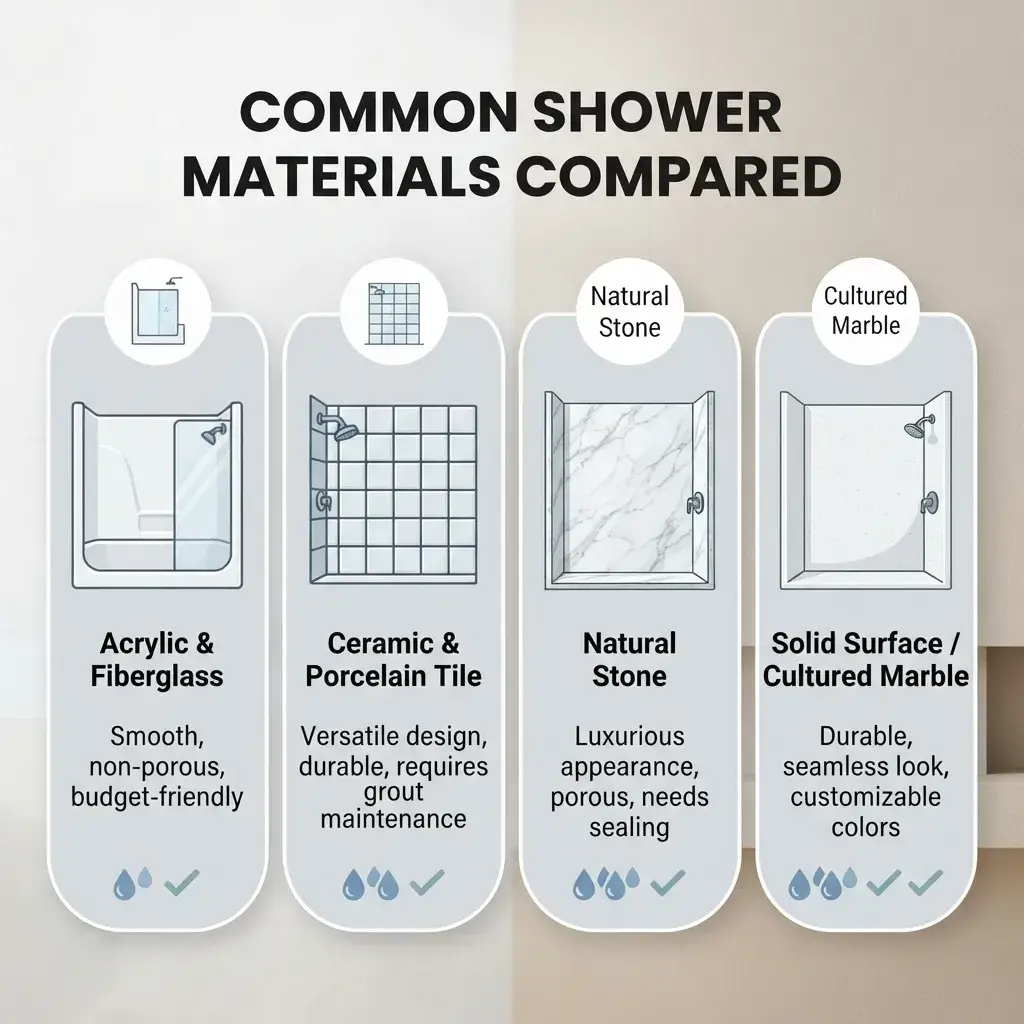
Ceramic and porcelain tile remain top picks for shower walls. Porcelain tile is denser and absorbs less water than ceramic, so it holds up better in wet spaces. Glass tile adds shine and reflects light, which helps a small shower feel larger. All three types need grout, and grout lines call for regular sealing to block mold growth. The Tile Council of North America publishes installation guidance covering proper grout width and waterproofing methods for tile showers.
Natural Stone (Marble, Granite & Travertine)
Marble, granite, and travertine bring a natural, upscale look to a shower. These stones are porous, so they soak up water and stains unless sealed. Granite ranks as the most durable of the three and resists scratches well. Marble is softer and can etch when acidic cleaners touch it. The Natural Stone Institute recommends periodic sealing to protect stone from moisture and daily wear.
Acrylic & Fiberglass Surrounds
Acrylic and fiberglass surrounds arrive as one piece or a few large panels. This design limits seams, so water has fewer paths to reach the wall behind it. Fiberglass costs less than acrylic but scratches more easily over time. Acrylic keeps its color and shine longer, which makes it a popular pick for busy households. Both materials install quickly and suit small bathrooms well.
Solid Surface, Engineered Stone & Cultured Marble
Solid surface and engineered stone copy the look of natural stone without the sealing chore. These materials stay nonporous, so they resist mold and stains with little upkeep. Cultured marble blends stone dust and resin, then pours into a mold to form a smooth, seamless wall. This group delivers strong design versatility at a lower cost than solid granite or marble.
Panel Systems (Laminate, PVC Composite & Stainless Steel)
Panel systems made from laminate, PVC composite, or stainless steel offer a newer option for shower walls. Laminate panels click together and install over existing tile or drywall, which trims labor time. PVC composite panels block water completely and never need sealing. Stainless steel panels fit modern designs and hold up well in commercial or accessible bathrooms. These systems often cost less to install than tile because they need less skilled labor.
Shower Floor Materials (and Why They’re Different From Walls)
Floor materials work harder than wall materials because they carry your full weight and get wet every day. A shower floor needs slip resistance, while a wall mainly needs to block water. This is why floor and wall choices often differ, even within the same shower.
Shower Pans (Cast Iron, Acrylic & Fiberglass)
A shower pan forms the base of the shower and guides water to the drain. Cast iron pans are heavy and extremely durable, often lasting decades without cracking. Acrylic pans are lighter and easier to install, which lowers labor cost. Fiberglass pans offer the most affordable option but can flex or crack under heavy use over time.
Tile & Stone Floors
Small tile pieces, often called mosaic tile, work best on shower floors because more grout lines give your feet extra grip. Large tile or stone slabs look sleek but can turn slick when wet. Stone floors need the same sealing as stone walls to resist water and stains.
Non-Slip Surface Considerations
Texture matters as much as material on a shower floor. Textured tile, pebble tile, and slip resistant coatings all add grip underfoot. Many manufacturers rate floor tile with a coefficient of friction score, and a higher number means better traction when wet — this is especially worth discussing if you’re planning an accessible or aging-in-place bathroom, where floor traction matters even more.
Materials to Avoid in a Shower
Some materials simply do not belong in a wet shower space. Drywall breaks down quickly when it gets wet again and again, leading to mold and structural damage. Wallpaper traps moisture behind it and peels away in humid conditions. Unsealed wood swells, cracks, and invites mold growth over time. Skipping these materials during a remodel protects your home and saves money on repairs later.
Shower Material Costs: Budget, Mid-Range & High-End
Shower material costs vary widely based on the product and the installation labor involved. Here is a simple breakdown by budget tier.
Budget-Friendly Materials
Fiberglass and acrylic surrounds stand as the most affordable choice for most homeowners. Ceramic tile in standard sizes and colors also fits a budget tier. Laminate panel systems offer a low cost, low labor option as well.
Mid-Range Materials
Porcelain tile, glass tile, and solid surface panels sit in the mid-range tier. These materials balance durability and design without the price tag of natural stone. PVC composite and stainless steel panels also land in this range.
High-End Materials
Natural stone, including marble, granite, and travertine, sits at the top of the cost scale. Custom engineered stone and large format stone slabs also carry a high-end price due to material and labor costs. These materials reward you with a long-lasting, upscale look. For an exact number on your own project, a fixed pricing quote after an in-home visit will beat any general estimate.
What Material Are Mobile Home Showers Made Of?
Mobile home showers, also called manufactured home showers, typically use a one-piece fiberglass or ABS plastic shower and tub unit. These units stay lightweight, which matters for manufactured housing built on a chassis. HUD’s Manufactured Home Construction and Safety Standards set requirements for plumbing and moisture control in these bathrooms. If you want to upgrade a mobile home shower, acrylic surrounds and panel systems are common replacement options because they are also lightweight and simple to install.
Frequently Asked Questions
What is the best material for a shower?
Porcelain tile often ranks as the best all around material for a shower wall because it resists water, lasts for decades, and comes in many styles. For an easier install, acrylic surrounds offer strong performance with fewer seams and lower maintenance than tile or natural stone.
What is the worst material for a shower?
Unsealed wood and standard drywall rank as the worst materials for a shower. Both absorb water quickly, which leads to mold, warping, and structural damage. Wallpaper also fails in a shower because trapped moisture causes it to peel and grow mold behind the surface.
What materials work well for shower floors versus walls?
Shower floors need texture and slip resistance, so small tile, pebble tile, or textured coatings work best. Shower walls need smooth, water resistant surfaces like porcelain tile, acrylic, or solid surface panels. Matching the material to its location keeps your shower safe and long lasting.
Which shower materials need regular sealing?
Natural stone materials like marble, granite, and travertine need regular sealing because they are porous and absorb water. Grout lines between tile pieces also need periodic sealing to block moisture and mold. Acrylic, fiberglass, and solid surface materials skip this step entirely.
Which shower material has the lowest maintenance?
Acrylic and fiberglass surrounds carry the lowest maintenance because they stay non porous and install with few seams. PVC composite panels offer another low maintenance option since they resist water completely and never need sealing or refinishing.
What material are mobile home showers made of?
Mobile home showers are usually made from one piece fiberglass or ABS plastic units designed for lightweight manufactured housing. These units meet HUD’s construction and safety standards for plumbing and moisture control, and they install faster than tile or stone options.
Not sure which material fits your own bathroom, budget, and layout? A free in-home consultation is the fastest way to get a straight answer and a fixed written quote.