
You should install a vessel sink for four clear reasons. It delivers instant style, installs easily on top of the counter, frees up storage, and gives you a versatile bowl in almost any material or shape. This above counter basin turns an ordinary vanity into the star of the room. Below you will find the real reasons to install one, the honest trade offs to plan for, and quick tips on faucets, height, and cost.
You should install a vessel sink to add a stylish focal point, gain easy above counter installation, free up cabinet storage, and enjoy a versatile bowl you can swap out anytime. It suits powder rooms, guest baths, and design forward remodels, and it pairs with many materials, from ceramic and glass to stone and copper.
What Is a Vessel Sink?
A vessel sink is a bowl style basin that rests on top of the counter or vanity rather than dropping below it. Because the whole bowl stays visible, it acts like a piece of decor. This design traces back to the earliest wash basins, yet it now feels fresh and modern in a bathroom. Round, oval, square, or sculpted, the shape is yours to choose.
Why Should I Install a Vessel Sink? The Main Benefits
Here are the strongest reasons to install one, drawn from how these basins actually perform in a bathroom.
A Stylish Statement Piece
The number one reason people choose this basin is the look. A raised bowl naturally draws the eye and gives your vanity a designer, boutique hotel feel. Whether you love a clear glass basin or a hammered copper bowl, the sink becomes a conversation piece. Few upgrades change the mood of a room this quickly.
Easy Installation and Simple Swaps
It is one of the easiest basins to install. The bowl rests on top of the counter, so you skip the precise cutout and support clips that an undermount demands. Most setups need only a drain hole and a faucet hole, plus a mounting ring or a bead of silicone to hold the bowl steady. Better yet, swapping the bowl later is simple, so refreshing your style down the road takes little effort.
More Counter and Cabinet Storage
Because the bowl sits above the surface, nothing hangs down into the cabinet below. That frees up real storage room inside the vanity, letting you stack taller items and fit more where a deep undermount basin once got in the way. On the counter itself, a compact vessel can also give back usable space around the bowl.
A Comfortable, Taller Wash Height
A raised bowl lifts the washing height, which many adults find easier on the back. Tall homeowners in particular enjoy bending less at the sink. Pair the bowl with a vanity sized for the added height, and daily washing feels natural and comfortable.
Endless Materials and Shapes
Versatility is a signature strength of this basin. You can pick ceramic, porcelain, tempered glass, natural stone, concrete, copper, or stainless steel, each with its own character. Shapes range from crisp rectangles to soft rounds and artisan forms. Whatever your bathroom style, a matching bowl exists, which makes personalizing the space genuinely fun.
Added Resale and Design Appeal
A striking basin photographs beautifully, and standout bathrooms help listing photos shine. While no single fixture sells a home, a tasteful bowl signals a thoughtful, updated space. Choosing a classic shape and neutral finish keeps that appeal fresh for years.
Honest Trade Offs to Plan For
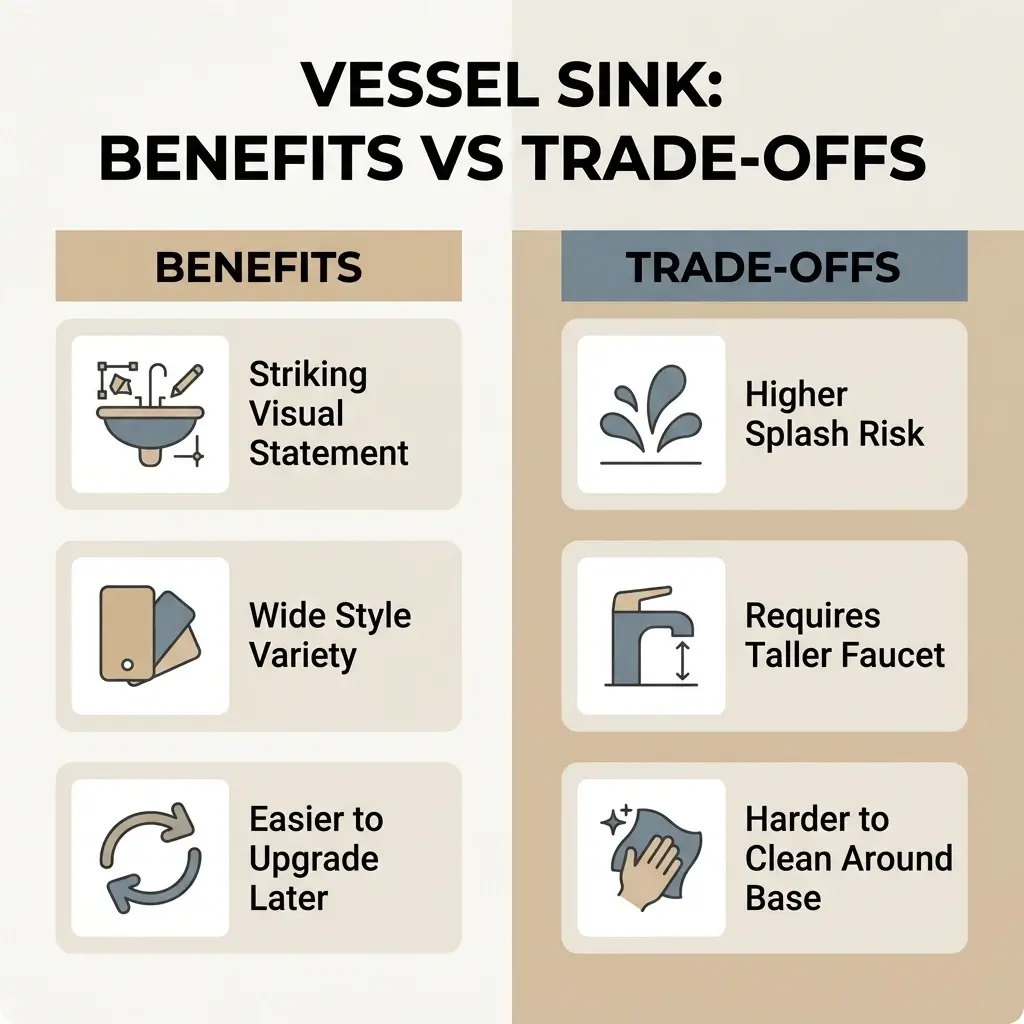
This basin rewards a little planning. Knowing the trade offs up front helps you enjoy the bowl every day.
Splashing and the Faucet Height Fix
Splash is the point people raise most, yet it comes down to pairing the bowl with the right faucet. When the spout sits too high, water falls hard and bounces out. Match a proper faucet to the bowl, though, and the raised walls of the vessel actually help contain water and keep the counter drier. Aim for a spout that clears the rim by one to three inches and lands water near the drain center.
Cleaning Around the Base
The spot where the bowl meets the counter needs regular attention, since grime can gather along that seam. A thin, even bead of silicone seals the junction and makes wiping easier. The exposed exterior also shows water spots, especially on glass, so a quick daily wipe keeps everything looking sharp.
Height for Children and Shorter Users
The same added height that tall users love can be a stretch for kids and shorter adults. A young child may need a step stool to reach the bowl comfortably. For a busy family bath, a semi recessed bowl that drops partway into the counter lowers the rim and makes reaching easy.
No Overflow Drain on Most Models
Many vessel sinks skip the overflow hole found on standard basins. That means a bowl left running can overflow rather than drain the excess. Choosing a drain designed for no overflow sinks and staying mindful of the tap keeps everything working smoothly.
Who Should Install a Vessel Sink and Who Should Skip One?
A vessel sink shines in a powder room, a guest bath, or any design forward remodel where a bold look pays off. Taller homeowners and anyone who wants a quick, high impact upgrade will love one. On the other hand, a hectic family bathroom with young children may suit a simple undermount that cleans fast and sits at a kid friendly height. Weigh who uses the room most, and the right call becomes clear.
How to Choose the Right Faucet and Height
Getting the faucet and height right is the secret to a bowl you enjoy every day. Treat the bowl, faucet, and counter as one system.
Set the finished rim height around 34 to 36 inches for most adults, which usually means pairing the bowl with a shorter vanity. Choose a vessel faucet or a wall mounted faucet tall enough to clear the rim by one to three inches. Point the spout so water lands near the drain, not the outer wall, to control splash. An aerated model in the range of 1.2 to 1.5 gallons per minute softens the stream and saves water; the EPA WaterSense guide on bathroom faucets explains how these efficient models cut flow without losing comfort. Dry fit everything and run a quick splash test before you drill.
Vessel Sink Materials at a Glance
Material shapes both the look and the care routine. Ceramic and porcelain are classic, affordable, and easy to clean, though they can chip under a hard knock. Tempered glass looks dramatic and catches light, yet it shows spots and needs gentle cleaners. Natural stone and concrete bring a warm, artisan feel and usually need periodic sealing. Copper and other metals are bold and durable, and copper even offers natural antimicrobial qualities.
How Much Does a Vessel Sink Cost?
Pricing spans a wide range, so there is an option for most budgets. Entry level ceramic or glass bowls often start around 100 to 250 dollars. Mid range basins land roughly between 250 and 700 dollars, while luxury and artisan pieces climb to 700 dollars and beyond. Remember to budget for a taller vessel or wall mounted faucet, which tends to cost more than a standard tap. On the upside, install labor can run lower than an undermount, since there is no complex cutout to cut and seal.
Ready to Upgrade Your Bathroom?
A vessel sink is one of the fastest ways to give a bathroom a fresh, high end feel. If you are planning a bathroom upgrade, a well chosen bowl paired with the right faucet delivers a lot of style for the effort. Take your measurements, pick a shape you love, and enjoy the transformation.
Frequently Asked Questions
Are vessel sinks a good idea?
Yes, a vessel sink is a great idea when design impact matters, such as in a powder room or guest bath. Plan the bowl depth, faucet height, and counter space together, and the payoff is a striking, comfortable basin that lifts the whole room.
Are vessel sinks still in style?
Vessel sinks remain popular in boutique, contemporary, and custom bathrooms. Their sculptural quality keeps them a designer favorite. Picking a classic oval or round shape in a neutral finish helps the look stay current for many years.
Do vessel sinks break easily?
Under normal use, a quality vessel sink holds up well. Ceramic and tempered glass can chip if a heavy object drops in, while stone and metal shrug off daily wear. Gentle cleaning and the right cleaner keep any material looking good.
Can you put a vessel sink on any vanity?
Most vanities can host a vessel sink as long as the top is flat, strong, and large enough for the bowl and faucet. Heavier stone bowls may need extra support. Because the bowl adds height, a slightly shorter vanity often gives the best finished rim height.
How high should a vessel sink and vanity be?
Aim for a finished rim height of about 34 to 36 inches for most adults. Since the bowl sits on top, that usually means choosing a vanity a few inches shorter than standard. For kids, a lower set or a semi recessed bowl works better.