
A shower liner is a waterproof sheet that hangs inside your shower curtain to stop water from splashing onto the bathroom floor. It works quietly in the background every time you shower, catching drips and spray before they reach your tile or hardwood. Most people install a shower liner without even thinking about it, yet it plays a big role in keeping a bathroom dry and mold-free. In this guide, you will learn what a shower liner is made of, what sizes are available, and how to pick and care for the right one.
A shower liner is a waterproof sheet usually vinyl, PEVA, EVA, or polyester that hangs inside a shower curtain to keep water from splashing onto the bathroom floor. It also protects the outer curtain from mold and mildew. Liners come in standard, stall, and extra-long sizes to fit different tubs and showers.
Shower Liner vs. Shower Curtain: Are They the Same Thing?
A shower liner and a shower curtain are not the same product, even though they often hang on the same rod. The liner sits on the inside, closest to the water, and its only job is to keep moisture contained. The curtain hangs on the outside and adds color, pattern, and style to the bathroom.
Think of the liner as the worker and the curtain as the decoration. One handles functions. The other handles look. Many bathrooms use both together for full protection and a finished appearance.
What a Shower Curtain Is For
A shower curtain is mainly a design piece. It gives the bathroom personality through fabric, prints, and texture. Cotton, linen, and polyester are common curtain materials, and none of them are fully waterproof on their own. That is exactly why a shower liner underneath matters so much.
Key Differences at a Glance
| Feature | Shower Liner | Shower Curtain |
| Main job | Blocks water | Adds style and privacy |
| Common materials | Vinyl, PEVA, EVA, polyester | Cotton, linen, polyester |
| Cleaning | Wipe down or machine wash | Regular washing needed |
| Design options | Simple, mostly clear or solid | Wide range of colors and patterns |
The 3 Different Things People Mean by “Shower Liner”
Not everyone uses the term the same way, and that can cause confusion when you search for one online. Depending on what category a shower curtain liner falls into for your project, you may actually be looking for one of three different products.
Shower Curtain Liner
This is the version most homeowners mean, and it is the focus of this guide. It is the waterproof sheet that hangs inside a fabric shower curtain in a standard bathtub or shower stall setup.
Shower or Tub Resurfacing Liner
Some contractors use the term for a custom acrylic shell that fits directly over an old, worn tub or shower. It gives a fresh surface without a full remodel and is typically installed by a professional as part of a bathroom update.
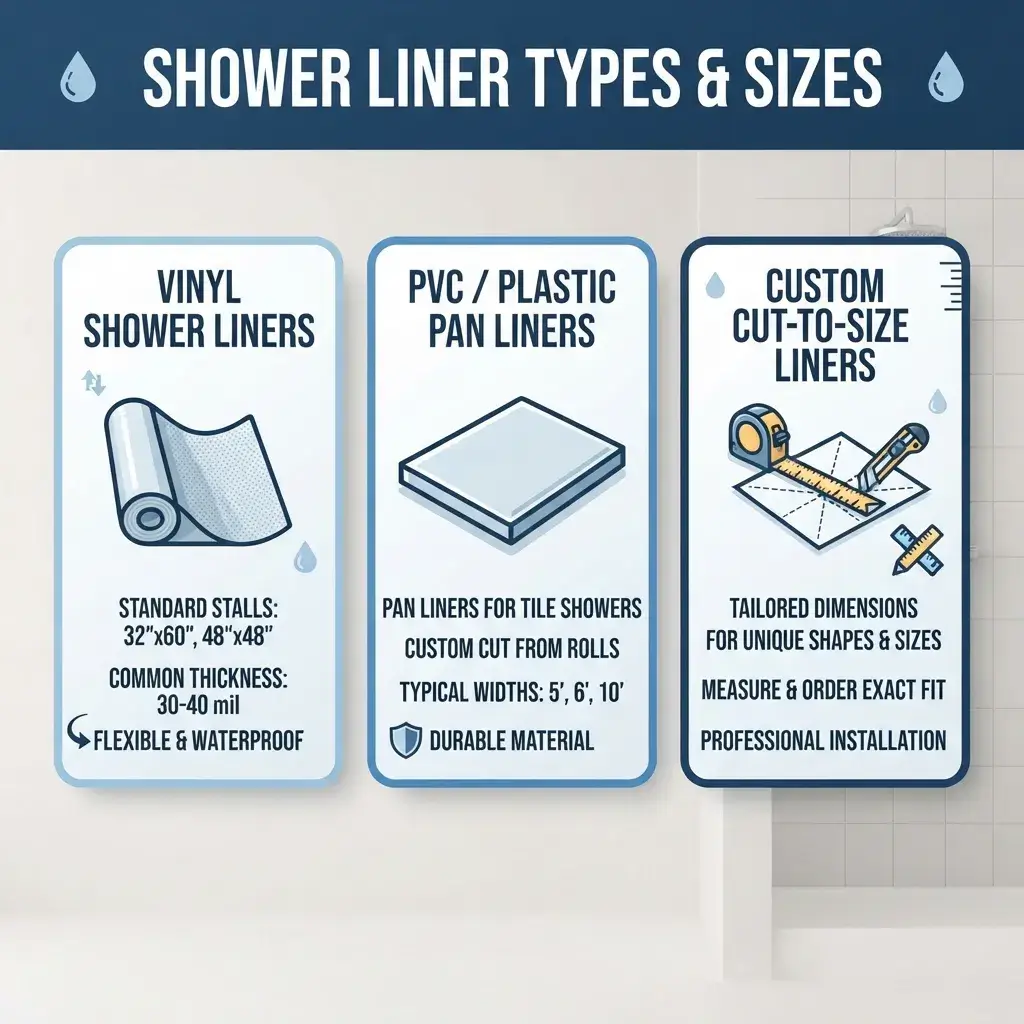
Shower Pan Liner
In new construction or a full shower rebuild, a shower pan liner is a waterproofing membrane installed under the tile and mortar bed. It sits hidden beneath the finished floor and catches any water that seeps through cracked grout, protecting the subfloor underneath. Installation of this type of liner typically follows industry waterproofing standards set by organizations like the Tile Council of North America to ensure the membrane performs correctly under tile.
The rest of this guide focuses on the shower curtain liner, since it is what most people are looking for when they search this topic.
What Is a Shower Curtain Liner Used For?
A shower curtain liner has one main purpose: keeping water inside the shower or tub area. Without it, splashing water can soak floors, damage subflooring, and create a slip hazard.
It also protects your decorative curtain. Fabric curtains absorb water and hold onto moisture, which invites mold and mildew over time. A liner takes that hit instead, since it dries quickly and resists buildup. This keeps your fabric curtain looking newer for longer.
Beyond water control, a shower liner also supports better hygiene in the bathroom. Its smooth, non-porous surface does not trap soap scum the way fabric does, so a quick wipe keeps things clean. This matters most in households with kids or shared bathrooms, where soap residue and moisture build up faster and a liner that wipes clean in seconds saves real cleaning time each week.
You may also explore Shower Remodel Inspiration: 9 Stunning Ideas.
What Are Shower Liners Made Of?
Shower liners come in several materials, and each one has its own strengths.
Vinyl and PVC Liners
Vinyl, also called PVC, is the most common and budget-friendly option. It repels water well and comes in many colors and finishes. Some people prefer to avoid vinyl due to the chemicals used in production, which leads them toward PEVA or EVA instead. If air quality is a concern in your bathroom, the U.S. EPA’s guidance on indoor air quality explains how off-gassing from plastics like PVC can contribute to indoor VOC levels, which is one reason some buyers look for chlorine-free alternatives.
PEVA and EVA Liners
PEVA stands for polyethylene vinyl acetate, and EVA stands for ethylene vinyl acetate. Both are considered friendlier alternatives to standard vinyl since they skip chlorine in manufacturing. A PEVA shower liner is a popular choice for buyers who want strong water resistance without the added chemicals found in PVC.
Fabric and Polyester Liners
Fabric liners, often made from polyester, offer a softer look and feel. They tend to cost more than plastic options but bring a more polished appearance to the bathroom. Many fabric liners include a water-resistant treatment to help them perform closer to a plastic liner.
What Is the Standard Size for a Shower Curtain Liner?
Most standard shower curtain liners measure 70 by 72 inches or 72 by 72 inches, depending on the brand. This size range exists because it is built around the standard 60-inch bathtub: the extra width on each side allows the liner to overlap the tub edges and hang straight without leaving gaps, while the 72-inch length clears a rod mounted at a typical ceiling height. This size fits a typical bathtub or shower and hangs from a rod set at a standard height.
Stall Size Liners
Smaller shower stalls, often found in half bathrooms or compact spaces, use stall-size liners. These usually run around 54 by 78 inches to fit a narrower opening without extra fabric bunching at the sides. Within this category, you will also see liners sold as a medium-weight stall shower liner, a mid-thickness vinyl or PEVA option that balances durability with flexibility, making it a common pick for stalls that see daily use without needing the heaviest (and stiffest) commercial-grade material.
Extra Long and Extra Wide Options
Walk-in showers or taller ceilings sometimes call for an extra-long liner, which can reach 84 inches or more in length. Wider showers may need an extra-wide liner to fully cover the opening and prevent gaps where water can escape.
Always measure your shower or tub opening before buying a shower liner, since a size that is too small will leave gaps and a size that is too large will bunch and drag.
Shower Liner Features Worth Knowing
A few small design details make a real difference in how well a shower liner performs day to day.
Weighted Hems
A weighted hem has small weights sewn into the bottom edge of the liner. This keeps it hanging straight and prevents it from billowing into the shower during use, which cuts down on water escaping past the edges.
Reinforced Grommets
Grommets are the reinforced holes at the top of the liner where hooks attach. Strong grommets resist tearing over time, even with daily use.
Suction Cups and Magnets
Some liners include small suction cups or magnetic strips along the bottom edge. These help the liner cling to the tub wall, adding another layer of protection against splashing water.
Do You Need Both a Shower Liner and a Shower Curtain?
Yes, using both together gives the best results for most bathrooms. The liner handles water protection while the curtain adds privacy and style. If you prefer a simpler setup, some curtains come with a built-in liner, combining both functions into a single piece. This option works well for smaller bathrooms or rental units where convenience matters most.
How to Care for and Clean a Shower Liner
Regular care keeps a shower liner working well and looking fresh.
- Cleaning: Wipe vinyl or PEVA liners with a damp cloth and mild soap. Many plastic liners can also go through a gentle wash cycle in the washing machine, though it helps to check the label first.
- Replacement: A shower liner typically lasts between six months and a year with regular use. Watch for signs like tearing, stiffness, or dark spots that will not wipe away, since these signal it is time for a new one.
- Recyclability: PEVA and EVA liners are often recyclable, while standard PVC liners usually are not accepted by most recycling programs. Checking with your local recycling center will confirm what your area accepts.
Frequently Asked Questions
What is the difference between a shower liner and a shower curtain?
A shower liner is the waterproof inner layer that blocks moisture, while a shower curtain is the decorative outer layer that adds color and privacy.
What materials are shower liners made of?
Common materials include vinyl, PVC, PEVA, EVA, and polyester, each offering different levels of water resistance and eco-friendliness.
How often should a shower liner be replaced?
Most liners need replacing every six months to a year, depending on use and how well they are cleaned.
How do you clean a shower liner?
Wipe it down with mild soap and water, or run it through a gentle wash cycle if the material allows machine washing.
Can a shower liner be recycled?
PEVA and EVA liners are often recyclable, while PVC liners are generally not accepted by most curbside programs.
Can I use a shower liner as a shower curtain?
Yes, though most liners are clear or plain, so they offer less privacy and style than a dedicated curtain.
What does “weighted hem” mean on a shower liner?
It refers to small weights sewn into the bottom edge to keep the liner hanging straight and prevent it from swinging into the shower.
Do you need both a shower liner and a shower curtain?
Most bathrooms benefit from both, since the liner blocks water and the curtain adds design and privacy.
What is a shower pan liner?
A shower pan liner is a waterproofing membrane installed underneath tile in a shower floor, separate from a shower curtain liner.
Final Thoughts: Which Shower Liner Is Right for You
Choosing the right shower liner comes down to your shower size, your material preference, and how much upkeep you want to handle. A vinyl liner offers the lowest cost and easiest cleaning. A PEVA or EVA liner suits buyers who want a lighter environmental footprint. A fabric liner fits those who want a softer, more decorative look paired with water resistance.
Whatever you choose, pairing a proper shower liner with your curtain protects your floors, your fixtures, and your bathroom’s overall condition for years to come.